Integrating Facebook with Frontegg lets your application authenticate users with their Facebook account and read profile and page data through the Meta Graph API. You configure the integration by creating a Meta for Developers app with the Facebook Login use case, then providing the App ID, App secret, and Frontegg redirect URL.
Prerequisites
Prerequisites
- A Meta for Developers account.
- A Meta Business Portfolio to associate with the app (you can also create one during app creation).
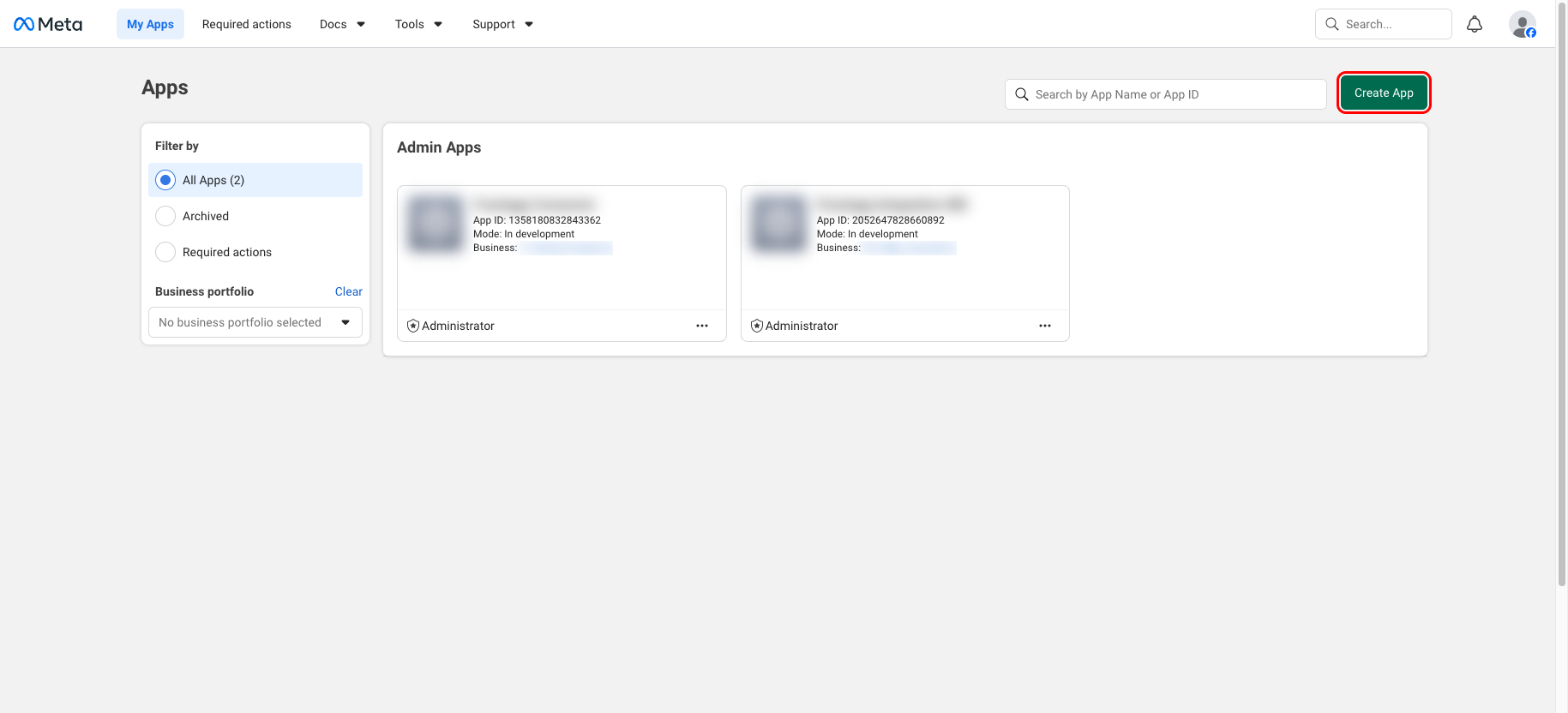
Sign in to the Meta for Developers apps page with your Facebook account. Click Create App to start the app creation flow.
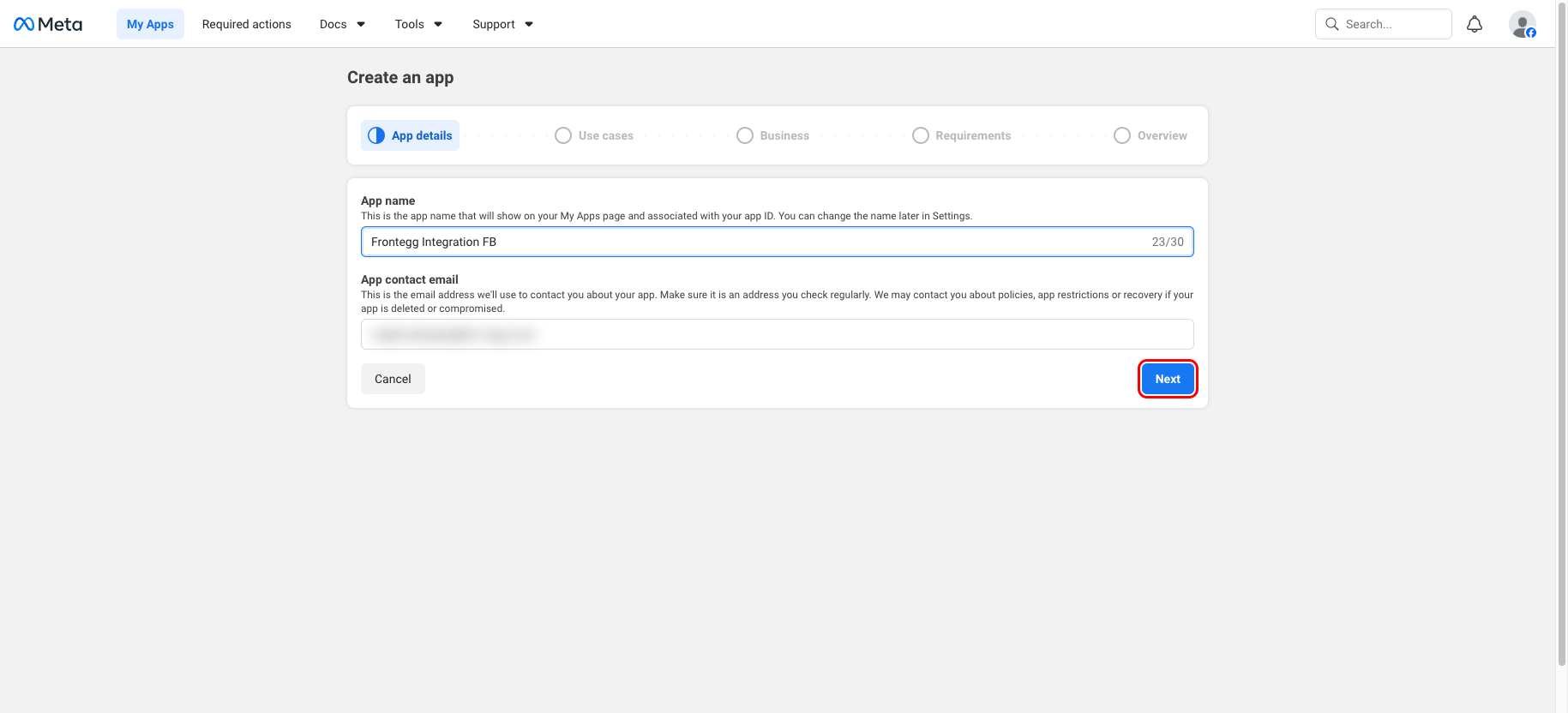
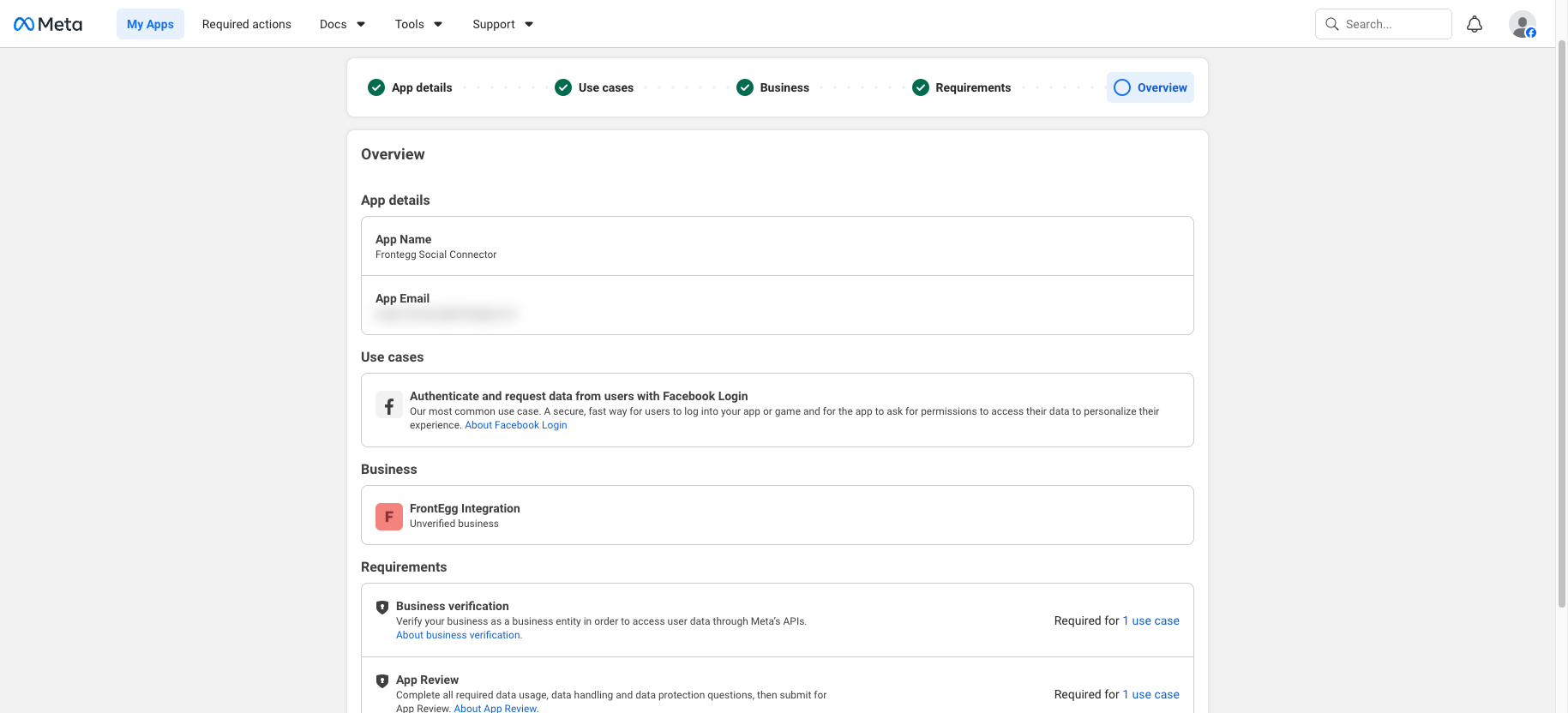
Enter an App name (for example, Frontegg Social Connector) and confirm the App contact email. Meta uses this email for policy notifications, so set it to an address you check regularly. Click Next.
App name restrictions
App name restrictions
Meta does not allow app names that contain reserved brand terms like FB, Face, Book, Insta, Gram, or Rift. Choose a neutral name (for example, Frontegg Social Connector) instead.
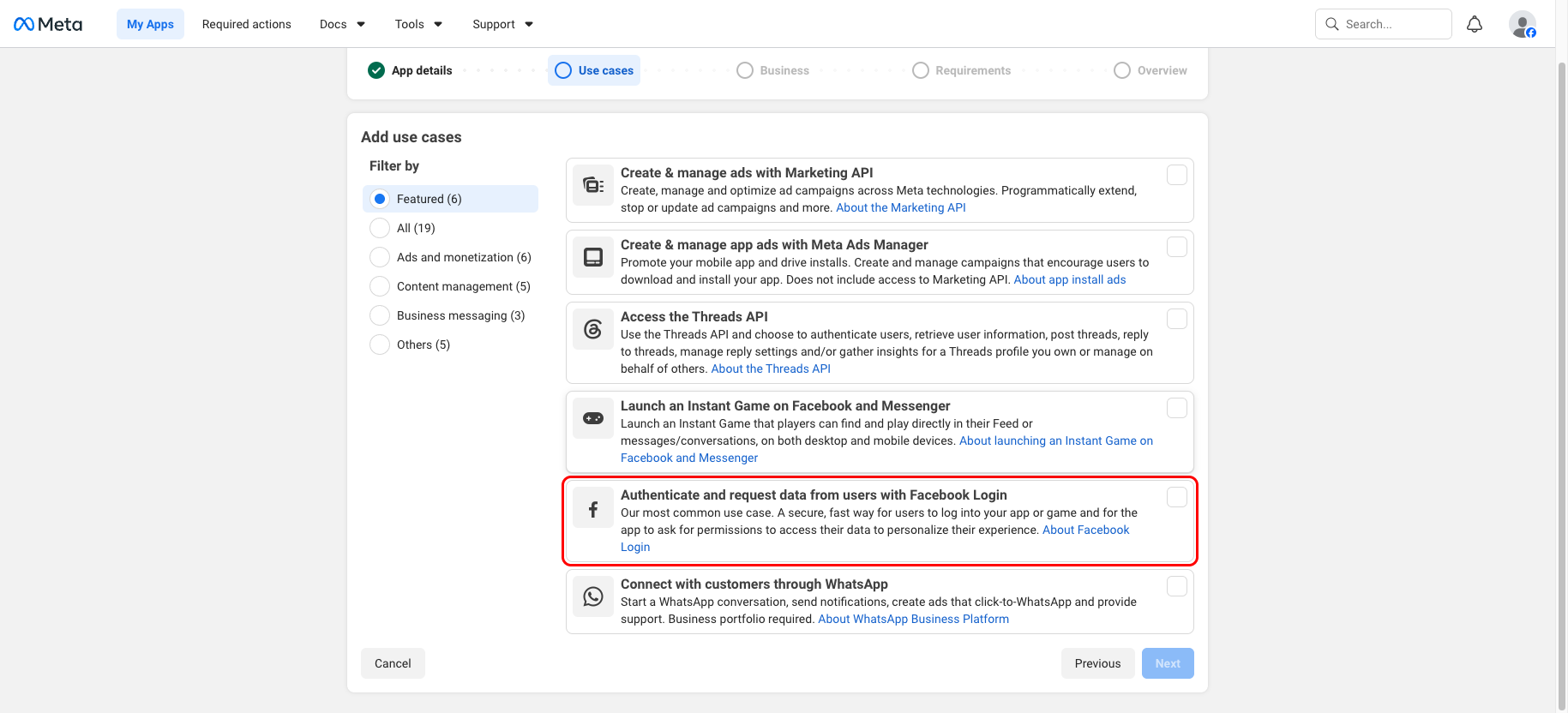
On the Use cases step, select Authenticate and request data from users with Facebook Login. This is the standard use case for OAuth integrations that need to read user profile and email. Click Next.
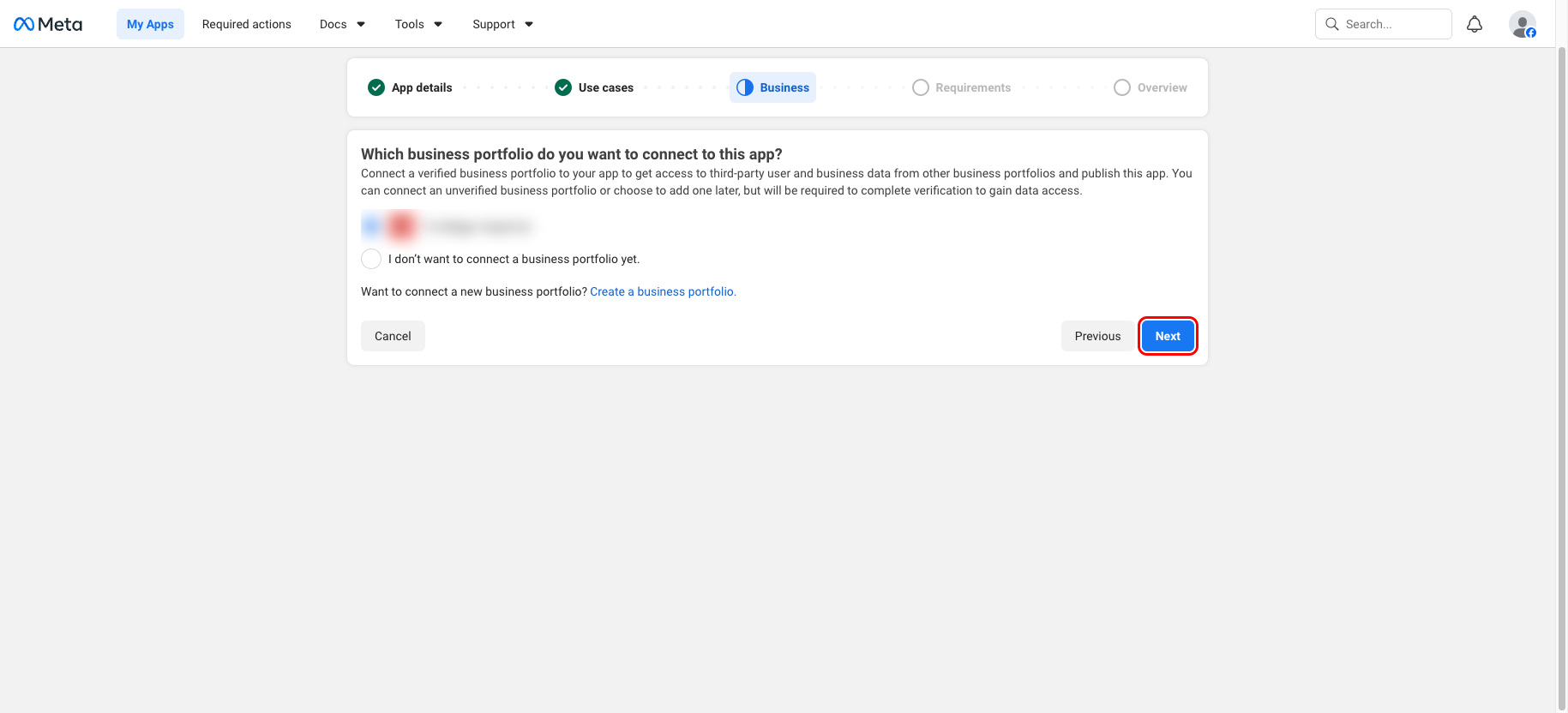
On the Business step, choose the Business Portfolio that will own this app, then click Next. You can connect an unverified portfolio now and complete business verification later when you submit for App Review.
Click Next through the Requirements step, review the Overview, then click Create app. Meta may ask you to re-enter your Facebook password to confirm.
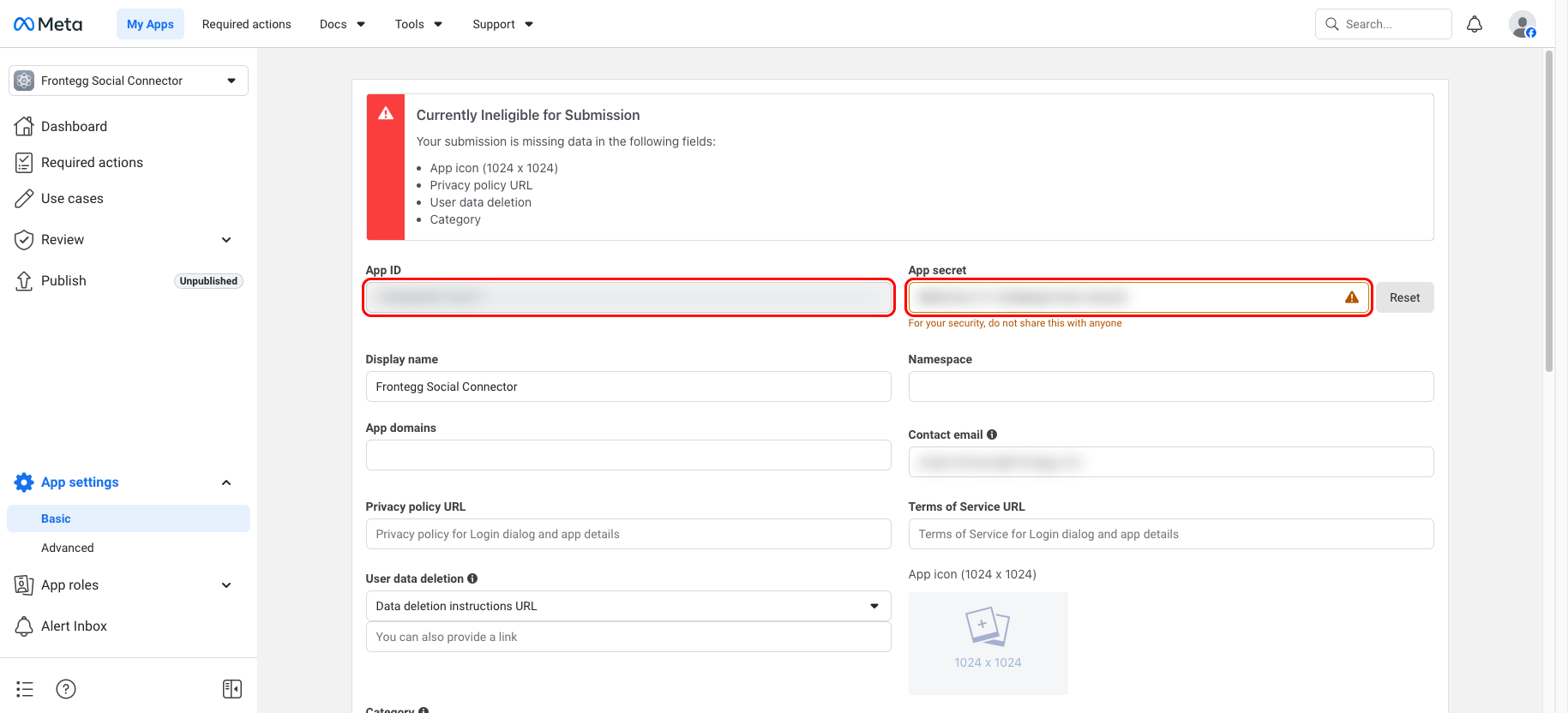
In the app dashboard, navigate to App settings → Basic. The top of the page shows the App ID and App secret. Copy the App ID — this is your Frontegg Client ID. Click Show next to App secret, re-enter your Facebook password when prompted, and copy the value — this is your Frontegg Client Secret.
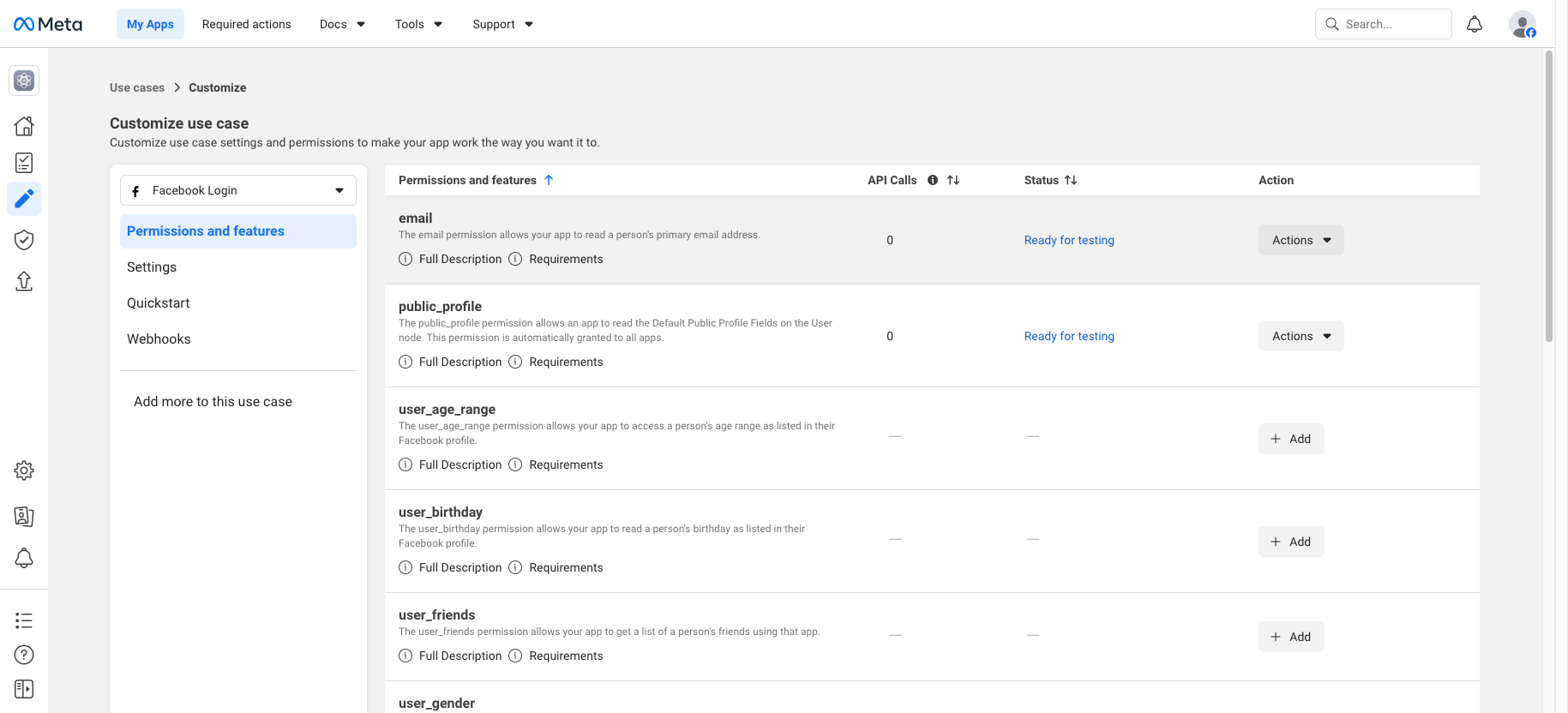
Navigate to Use cases → Customize on the Authenticate and request data from users with Facebook Login tile. On the Permissions and features tab, click Add next to each permission you need. public_profile is granted to every app by default, so at minimum add email.
The integration uses the following scopes:
| Scope | Description |
|---|---|
public_profile | Read the default public profile fields on the user node. Granted by default. |
email | Read the user's primary email address. |
pages_show_list | List the Facebook Pages the user manages. |
pages_read_engagement | Read page engagement data and posts. |
pages_manage_posts | Publish, edit, and delete posts on a Page. |
pages_read_user_content | Read user-generated content on a Page (comments, ratings). |
Pages scopes require additional use cases
Pages scopes require additional use cases
The pages_* scopes are not part of the Facebook Login use case. To request them, click Add more to this use case and add the Manage everything on your Facebook Page use case, then add the page permissions from its Permissions and features tab.
Standard access requires App Review
Standard access requires App Review
Permissions are initially Ready for testing — they work only for users assigned to the app under App roles → Roles or Test users. To grant access to any Facebook user, submit your app for App Review and request Standard access for each scope.
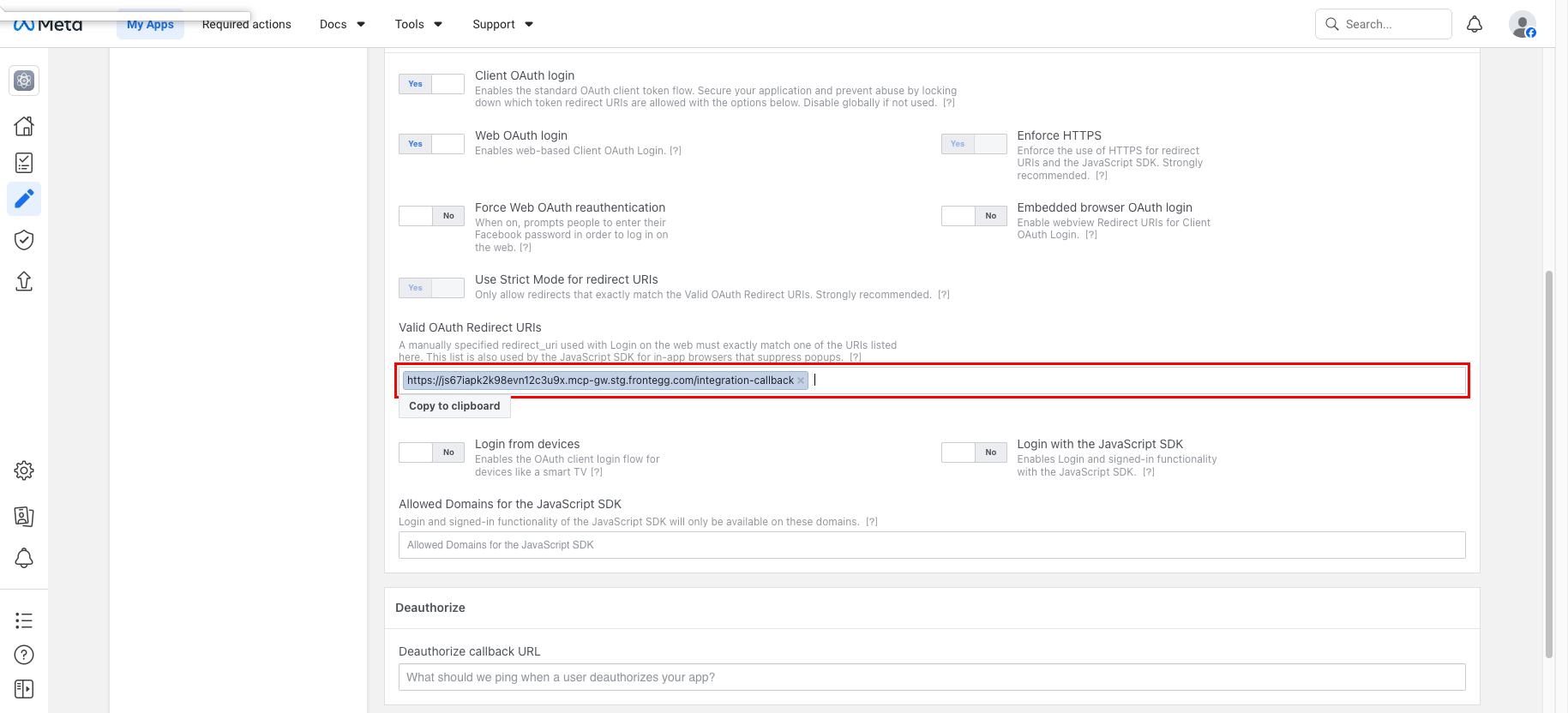
In the same Customize use case view, open the Settings tab. Scroll to Valid OAuth Redirect URIs and add your Frontegg redirect URL:
https://YOUR_MCP_GATEWAY_URL/integration-callback
Replace YOUR_MCP_GATEWAY_URL with the MCP Gateway URL from the Frontegg portal Settings → Basic configuration page. Press Enter to add the URI as a chip, then click Save changes.
Open the Facebook OAuth dialog in a new tab to confirm that the redirect URL, App ID, and scopes are wired correctly:
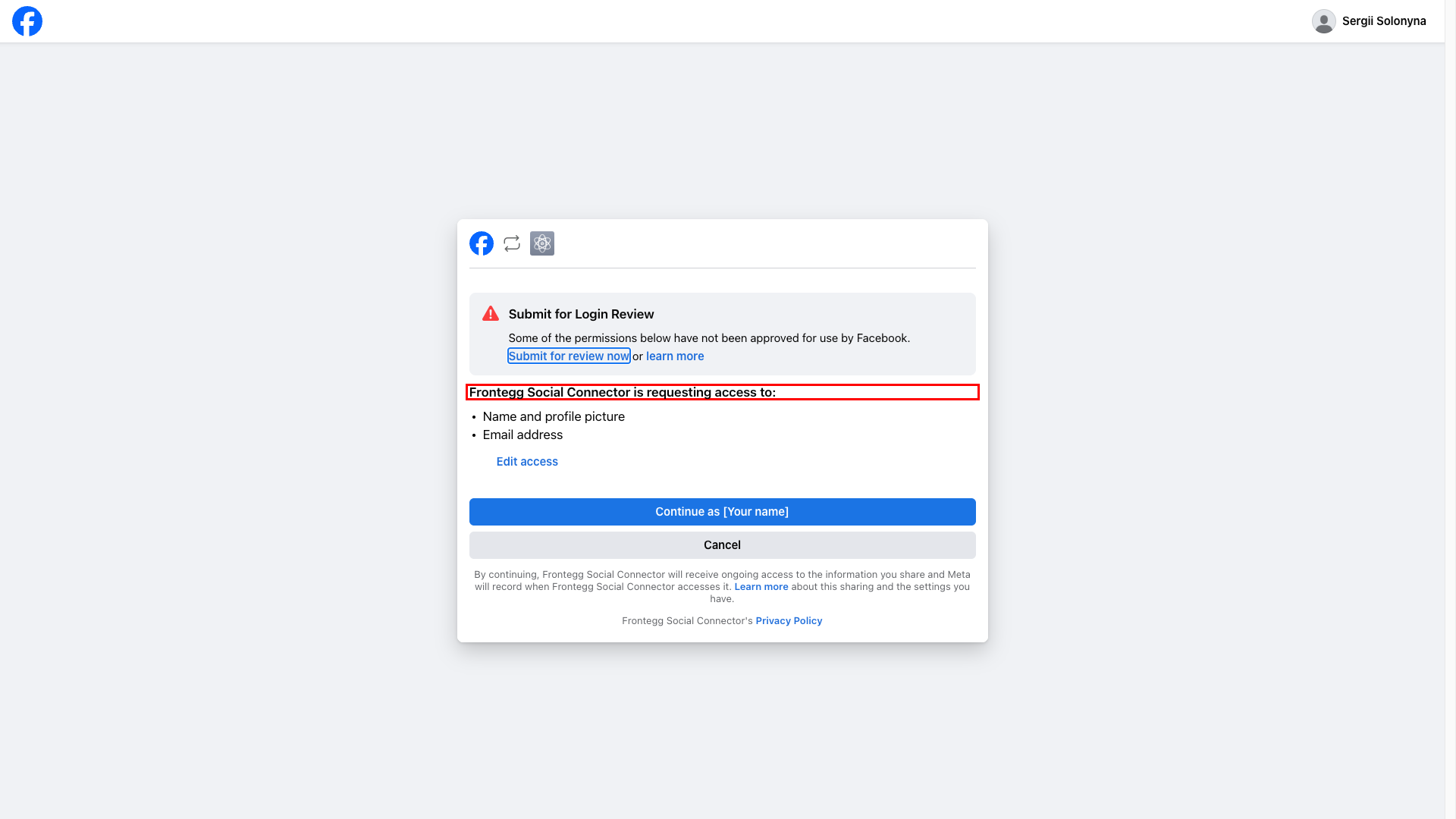
https://www.facebook.com/v24.0/dialog/oauth?client_id=YOUR_APP_ID&redirect_uri=https://YOUR_MCP_GATEWAY_URL/integration-callback&response_type=code&scope=public_profile,emailFacebook should display a consent screen titled "Frontegg Social Connector is requesting access to:" listing Name and profile picture and Email address — this is the screen end users see when authorizing the integration.
Once you have your App ID (Client ID) and App secret (Client Secret), enter them in the Frontegg portal:
- Open the Frontegg portal and navigate to [ENVIRONMENT] → Integrations → Facebook.
- Enter the Client ID and Client Secret in the corresponding fields.
- Select the required scopes.
- Click Save.
When a user authorizes the integration, Facebook prompts them to log in and grant the requested permissions to your app.
Keep your credentials secure
Keep your credentials secure
Never share or commit your App secret to version control.