Integrating YouTube with Frontegg allows your application to access and manage YouTube channel data, videos, and playlists — all through Frontegg's integration layer using Google OAuth 2.0.
Prerequisites
Prerequisites
- A Google account with access to Google Cloud Console
- A Google Cloud project (you can create one during setup)
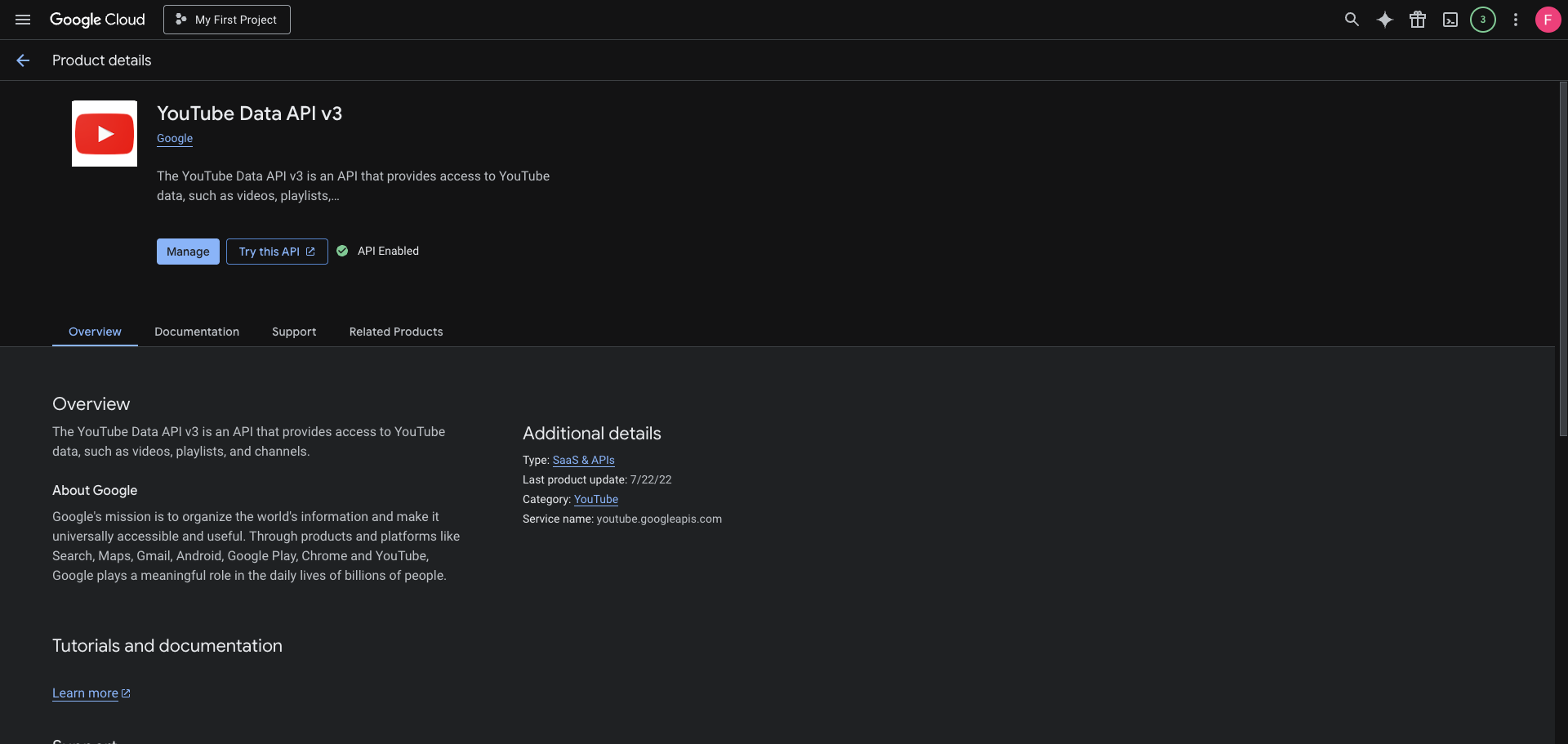
Go to the YouTube Data API v3 page in the Google Cloud Console. Select your project from the top navigation, then click Enable if the API is not yet enabled. If you see Manage and API Enabled, the API is already active.
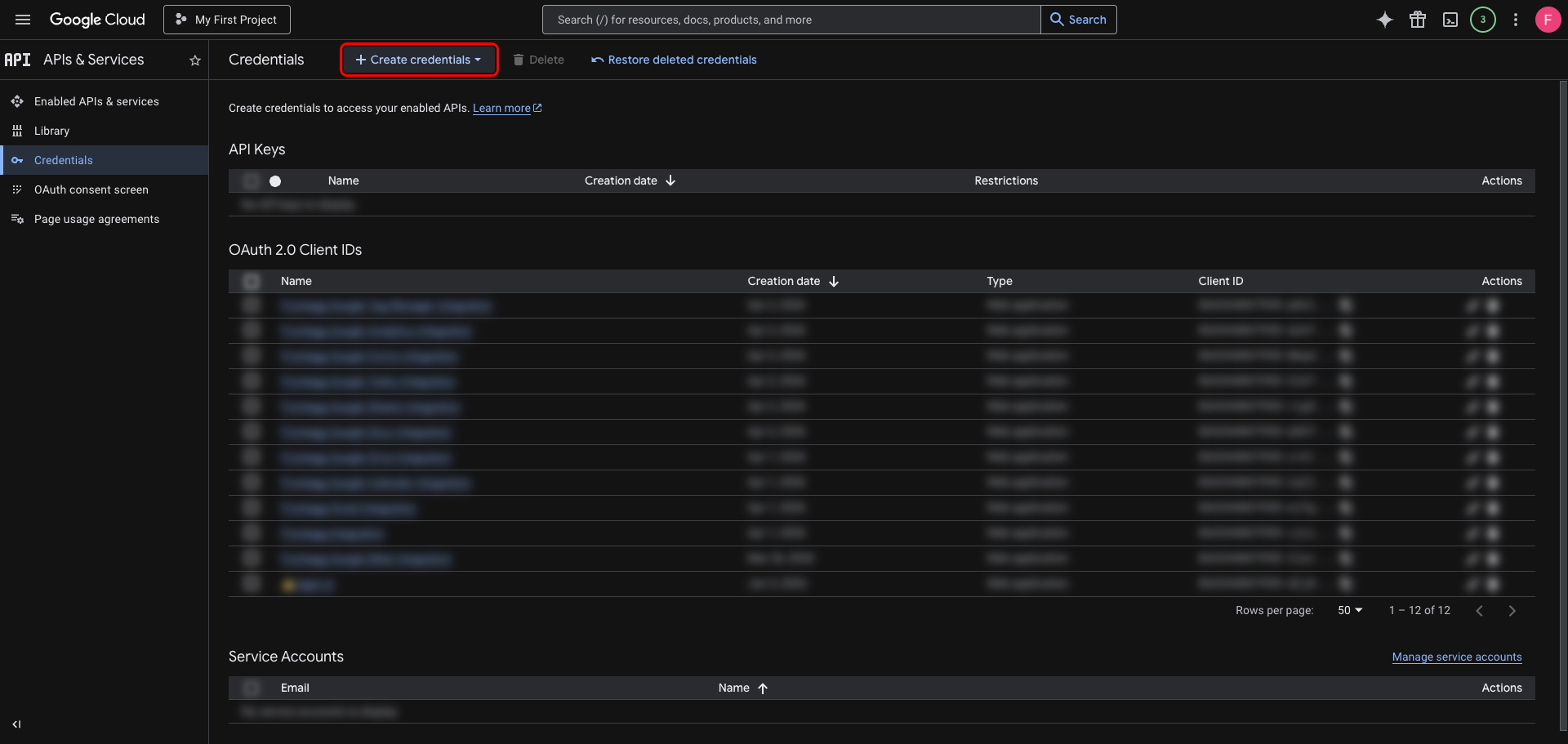
In the left sidebar, navigate to APIs & Services → Credentials. Click Create credentials.
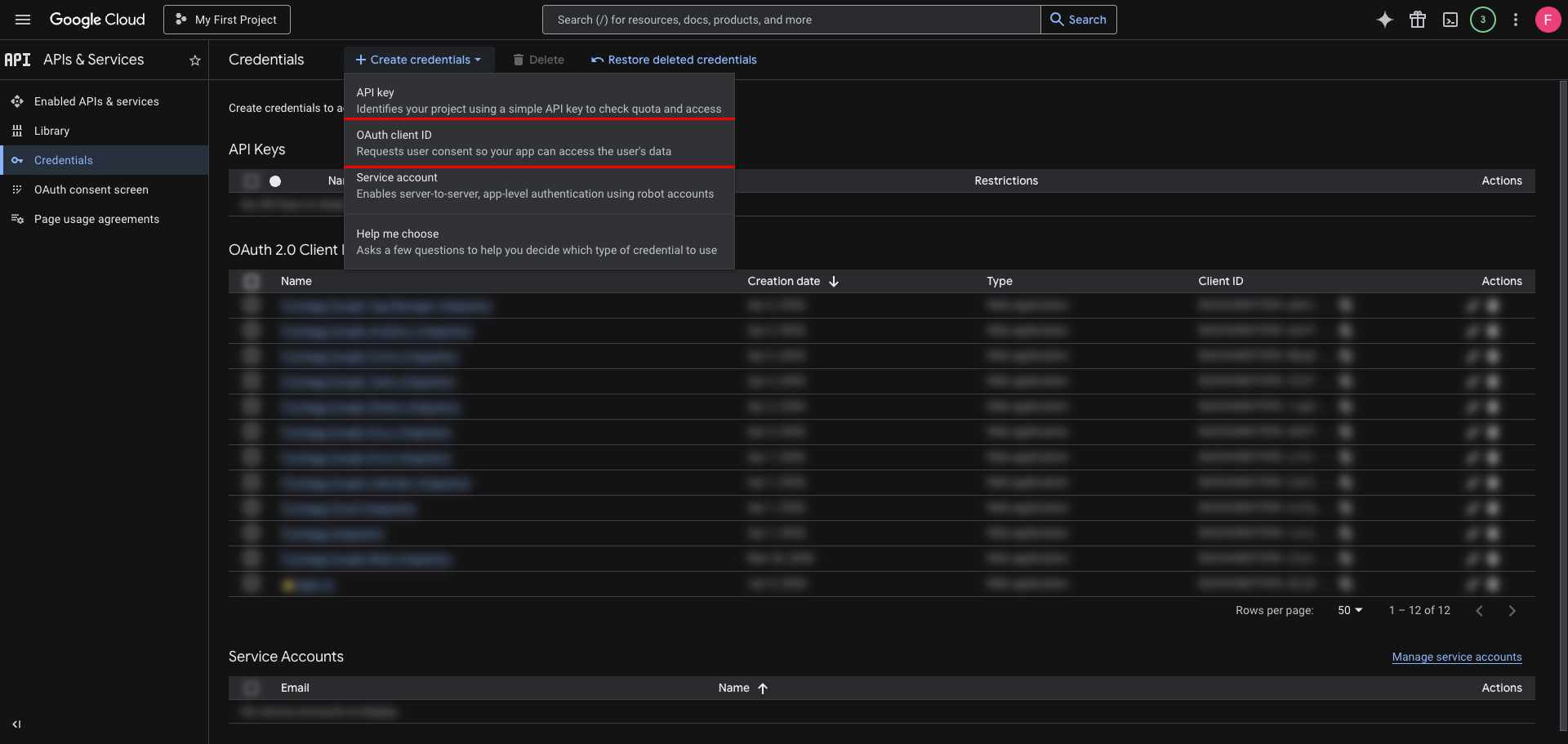
From the dropdown, select OAuth client ID.
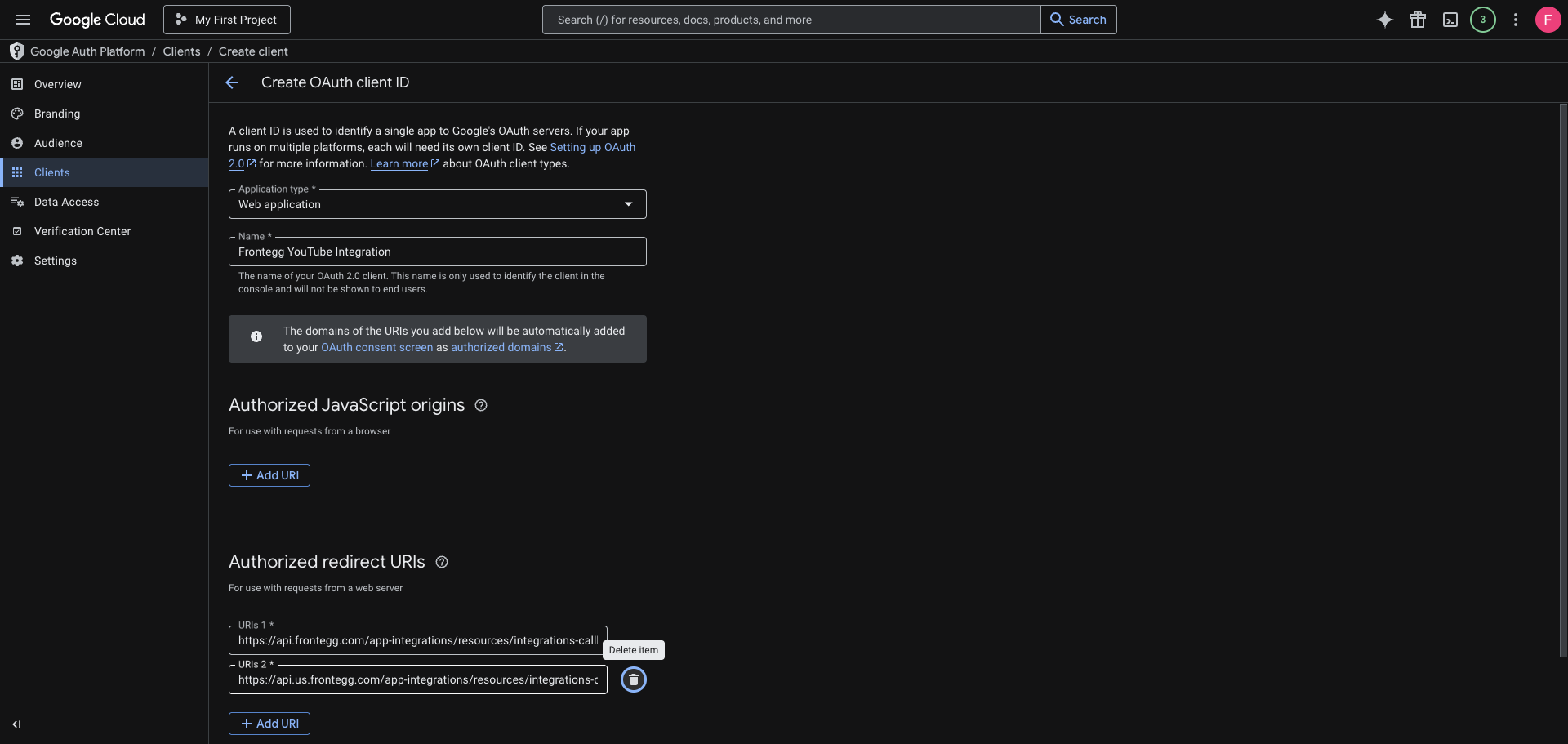
On the Create OAuth client ID page:
- Set Application type to Web application.
- Enter a name for the client (for example,
Frontegg YouTube Integration). - Under Authorized redirect URIs, click Add URI and add both of the following:
https://YOUR_MCP_GATEWAY_URL/integration-callback
Click Create.
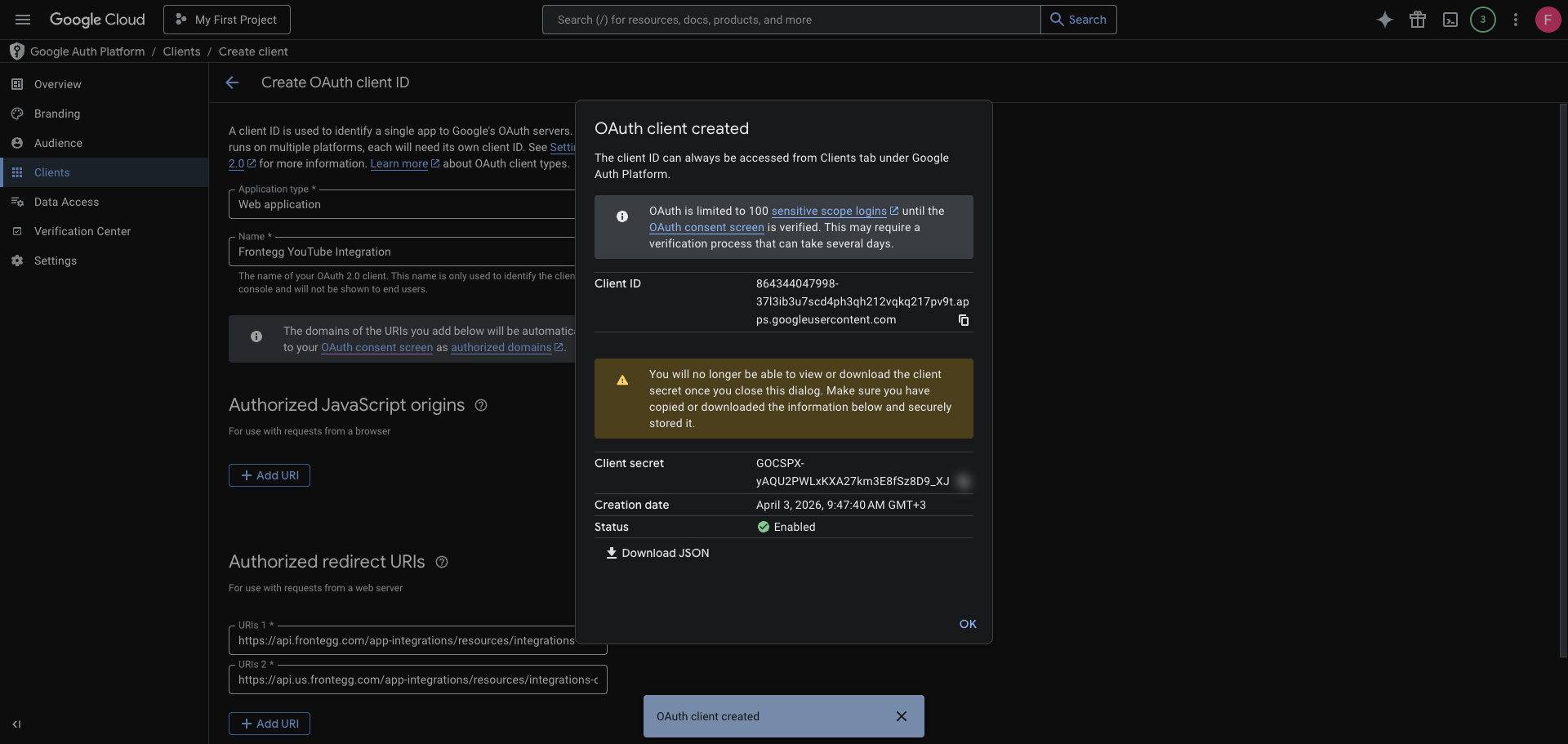
After clicking Create, a dialog displays your Client ID and Client Secret — copy both values and store them securely.
Save your Client Secret now
Save your Client Secret now
The Client Secret is only shown once in this dialog. After you close it, you cannot retrieve it again — you can only create a new secret.
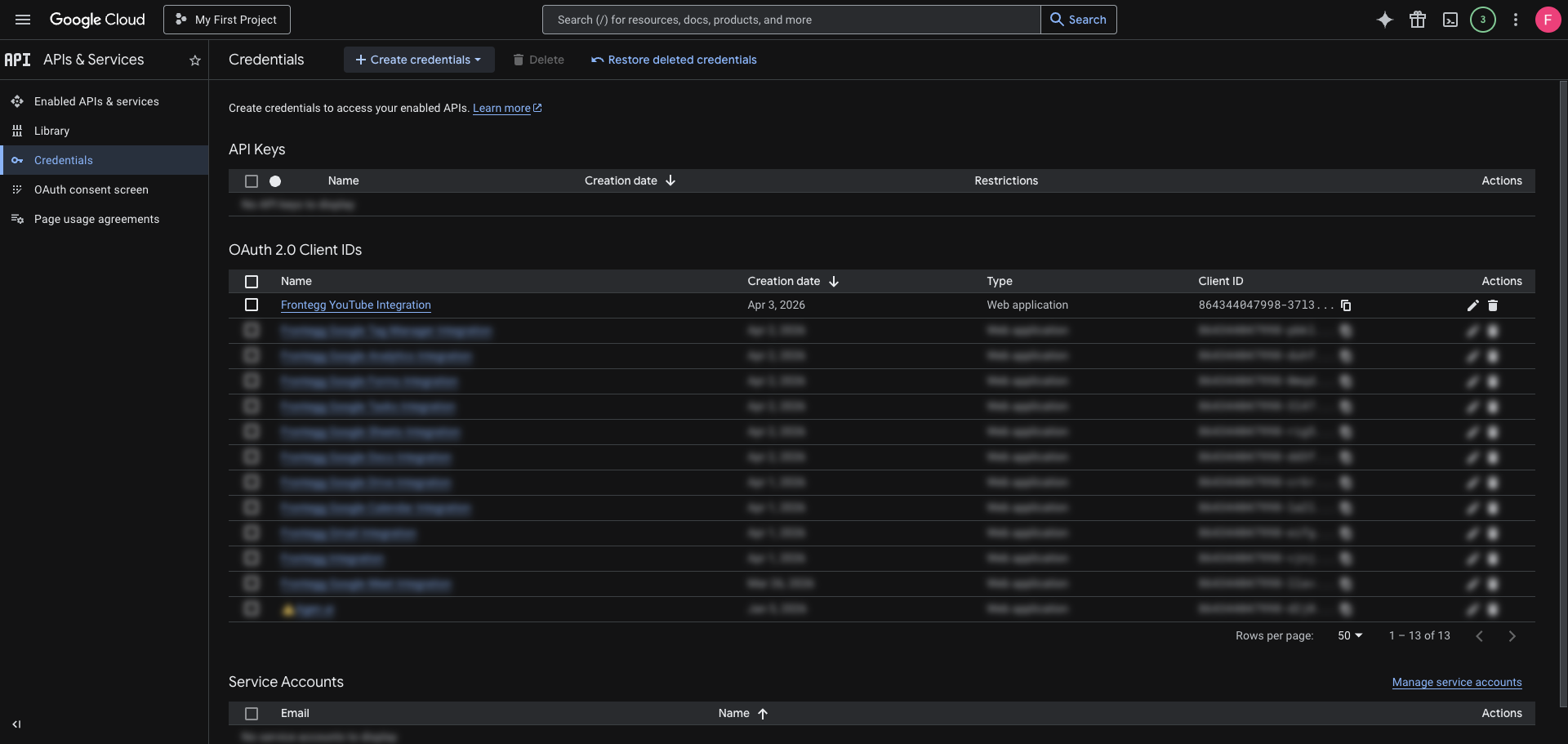
After closing the dialog, your new client appears at the top of the OAuth 2.0 Client IDs list on the Credentials page.
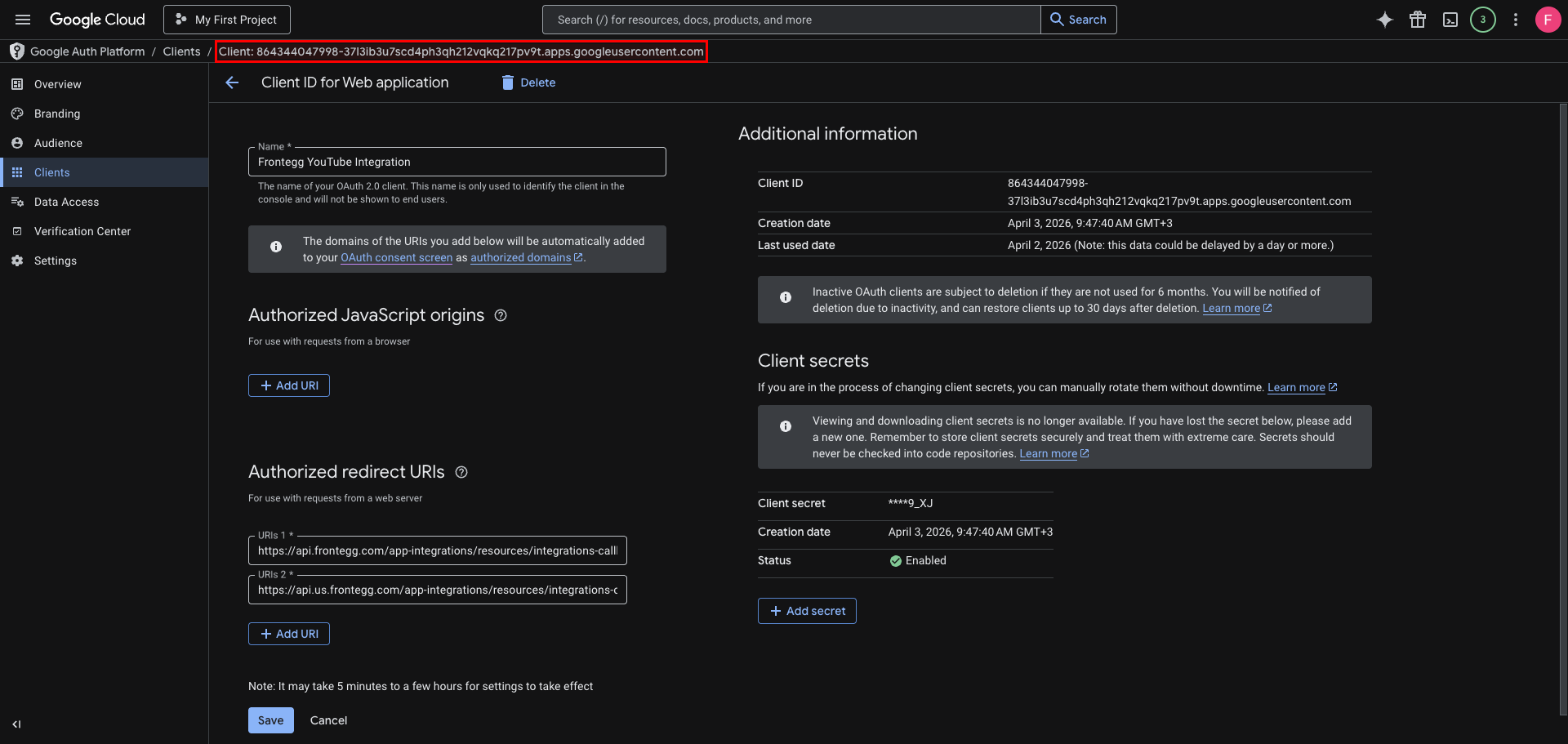
Click the client name to open its detail page. You can view and copy the Client ID at any time from the Additional information section.
Once you have your Client ID and Client Secret, enter them in the Frontegg portal:
- Open the Frontegg portal and navigate to [ENVIRONMENT] → Integrations → YouTube.
- Enter the Client ID and Client Secret in the corresponding fields.
- Select the required scopes:
| Scope | Description |
|---|---|
https://www.googleapis.com/auth/youtube.readonly | View YouTube account data, including channels, videos, and playlists |
https://www.googleapis.com/auth/youtube.upload | Upload YouTube videos |
https://www.googleapis.com/auth/youtube.force-ssl | See, edit, and permanently delete YouTube videos, ratings, comments, and captions |
https://www.googleapis.com/auth/youtube | Manage your YouTube account |
- Click Save.
Keep your credentials secure
Keep your credentials secure
Never share or commit your Client Secret to version control.